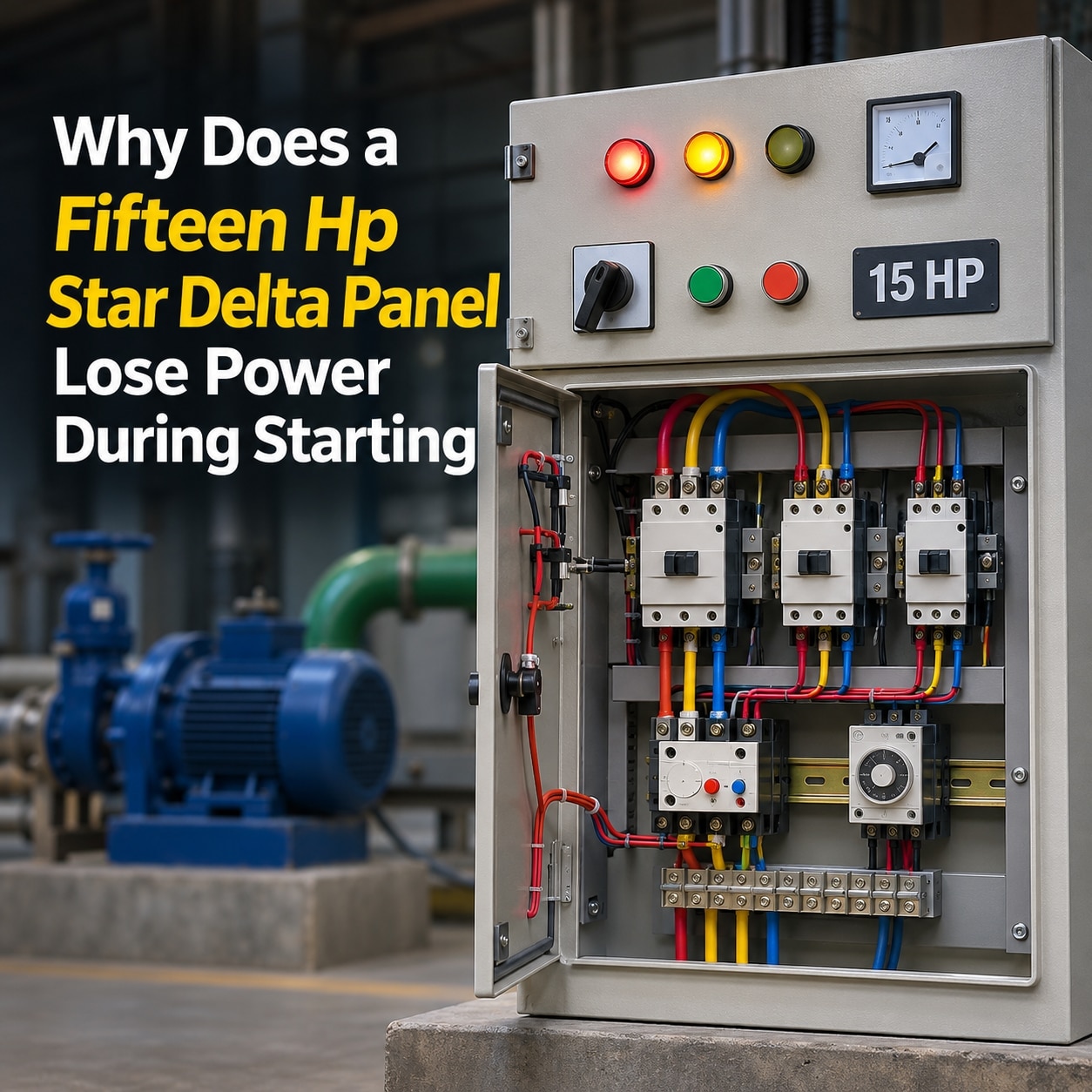

The right choice depends on more than whether a pump can receive an SMS command. You will compare control methods, match the GSM interface to the starter and motor, check network and power conditions, and define tests that prove the pump responded safely.
Key takeaways
- Choose GSM when travel or unattended sites create a real operating cost.
- Match the GSM output to the motor starter’s control circuit.
- Verify SIM service, signal strength, antenna placement, and auxiliary power onsite.
- Require run feedback and automatic recovery rules before accepting remote control.
Choose GSM only when remote access solves a real operating problem
Choose GSM when a person must start, stop, or check a pump from away from the site and no dependable internet connection exists. It is a better choice than local automation only when travel, delayed tank filling, or an unattended agricultural, construction, or water-supply site creates a real operating cost.
| Option | What it does | Choose it when |
|---|---|---|
| Local automatic controller | Runs the pump from pressure, level, dry-run, or overload logic | The pump operates at one site without human intervention |
| Timer | Starts and stops on fixed clock periods | Demand follows a predictable daily schedule |
| Float-switch system | Responds directly to tank or sump level | Water level is the only control condition |
| GSM controller | Accepts SMS or call commands and sends status remotely | You need basic remote access at a site without reliable internet |
| Full remote-monitoring system | Adds dashboards, alarms, history, and multiple measured values | Several sites or operators need recorded performance data |
A remote water pump GSM controller is not a substitute for protection or local control. Require a hardwired OFF or emergency-stop circuit and a manual/auto selector, so a failed network, software fault, or stuck relay cannot prevent shutdown.
SMS is store-and-forward messaging; an acknowledgement or delivery report does not prove that the contactor operated or water flowed.
Choose GSM only if its limited feedback suits the decision you need to make. If you require continuous trends, flow records, automatic escalation, or coordinated control across sites, select full remote monitoring instead.
Match the GSM output to the starter, not the motor horsepower
A 10 HP label does not tell you whether a GSM relay can start the pump. For gsm pump control unit selection, match the output to the starter’s coil voltage, coil current, and switching duty.
The GSM relay normally energises a contactor or interposing relay; connecting a motor directly to a small PCB relay can weld its contacts under starting inrush.
| Starter detail | What to verify | Why it matters |
|---|---|---|
| Supply phase | Single-phase or three-phase | Confirms the compatible starter and protection circuit |
| Motor load | Rated horsepower, full-load current, and starting current | Shows whether the starter and contactor can handle the motor |
| Starter type | DOL, Star-Delta, or another arrangement | Determines whether one output or a timed sequence is required |
| Coil | AC or DC voltage and measured coil current | Prevents an under-rated or incompatible GSM output |
| Contactor | Rated current and utilization category, such as AC-3 | Confirms that switching the starter is suitable for motor duty |
For gsm unit for motor starter selection, request the relay-contact rating for the actual coil load, not the supplier’s headline motor rating. Check isolation voltage, required fuse, output protection, and whether the unit needs an interposing relay.
Retain the starter’s short-circuit protection, overload relay, and phase-loss or voltage protection. The GSM command must energise the existing control circuit, not bypass it.
- The starter-coil voltage and current at your site
- A contactor auxiliary contact for run confirmation
- Safe output behaviour after auxiliary power returns, such as remaining OFF until a new command
Check SIM, signal, antenna, and auxiliary power at the pump site
A SIM that works in a technician’s phone does not prove suitability at the pump site. Confirm the controller’s required service—ordinary SMS, packet data with APN access, private APN, static addressing, roaming, or an M2M/industrial SIM—and check that SMS is not barred and inactivity suspension will not disable it.
1. Test the selected SIM and operator at the intended installation point, not only in a workshop. Register the controller after it is installed inside the final metal enclosure, then record signal strength and test commands in both directions.
2. Confirm the mobile technology before comparing gsm unit options for remote pump control in coimbatore. A 2G-only unit may support SMS today but carries network-availability risk; a 4G unit must state its LTE bands and whether it falls back to 2G for SMS.
3. Check whether the antenna is internal or remote, then request the cable length, connector type, and permission for an outdoor antenna. Metal panels weaken reception. Install surge and lightning protection for an external antenna, and route its RF cable separately from motor-power wiring.
4. Verify the auxiliary supply voltage, fuse requirements, operating-temperature range, and behaviour after power loss. Require a protected supply and a safe OFF restart, with a fresh authenticated ON command after recovery; automatic restart can flood a tank or damage equipment.
Repeat the test after weak signal, SIM removal, power interruption, and network re-registration. Ask for the event-log capacity and the exact alarm shown for each failure.
Install the control chain so a remote command cannot bypass protection
A GSM relay wired directly to a motor supply can leave protection out of the circuit. Use its output only to command the starter’s control circuit, not to carry motor current.
Wire the ON path in series through the hardwired emergency-stop or local OFF circuit, manual/auto selector, overload relay’s normally closed contact, and phase or voltage-protection trip contact before reaching the contactor coil. The GSM output should operate an interposing relay when its contact rating, coil voltage, or isolation does not match the starter.
A failed GSM unit must not defeat a local stop.
Configure the controller to return to OFF after auxiliary-power loss, reboot, communication failure, or watchdog reset. Require a fresh authenticated command after recovery; do not enable automatic restart unless the site assessment specifically permits it. Set a command timeout and reject unknown numbers, unauthorised SMS formats, or repeated commands.
- Confirm the starter has short-circuit protection, correctly sized contactor, overload setting, and phase-loss or voltage protection where required.
- Prove that an ON command energises the contactor coil only when the selector is in AUTO and every protection contact is healthy.
- Open the emergency-stop circuit and trip the overload; verify that the pump stops and a subsequent ON command cannot restart it.
- Remove auxiliary power, restore it, and check that the pump remains OFF.
- Test weak signal, SIM removal, network re-registration, and contactor feedback at the pump’s final panel location.
A relay-state message alone is not proof of operation. Use an auxiliary contact and, where needed, current, flow, pressure, or level feedback.
Demand feedback that proves pump operation and defines safe recovery
An ON message proves only that the GSM relay accepted a command. Require separate notifications for command received, contactor auxiliary-contact state, motor current or overload trip, and the process condition that matters: flow, pressure, tank level, or well level. Otherwise, an open breaker or failed contactor can appear to be a running pump.
Use this acceptance checklist at the final pump location, not only during a workshop demonstration:
- Register the selected SIM and operator with the controller installed inside its closed metal panel; record signal strength and test SMS or call commands.
- Confirm that ON feedback changes only after the auxiliary contactor contact closes, then test a failed contactor, open breaker, and overload trip.
- Remove the SIM, interrupt network service, and restore it; verify event logging, re-registration, duplicate-command handling, and notifications.
- Interrupt auxiliary power and confirm the specified restart policy. A protected supply and safe OFF state with a fresh authenticated start command prevent unwanted restarting and flooding.
Ask MAG STARTERS (PRAVIN ENGINEERING) - 08048068970, or any GSM mobile unit supplier in Coimbatore, for the relay-contact rating at your starter-coil voltage, isolation and fuse requirements, antenna arrangement, operating-temperature range, event-log capacity, supported LTE bands or 2G fallback, and written recovery behaviour. A headline motor rating is not acceptance evidence.
Related product
 | G S M MOBILE STARTER DOL THREE PHASE MOBILE STARTER 10HP MAG GSM Mobile Starter Features Manual - To Operate Gsm Mobile Control Auto on Auto Off Low Voltage Settings High Voltage Settings DryRun Tripping... |
Frequently asked questions
When is GSM remote pump control a better choice than local automation?
Choose GSM when someone must start, stop, or check the pump away from the site and dependable internet is unavailable. It earns its cost when travel, delayed tank filling, or an unattended farm, construction, or water-supply site creates a recurring operating problem.
How do you select a GSM unit for a motor starter?
Match the GSM unit’s relay output to the starter’s control circuit, coil voltage, and switching current. Do not select it from motor horsepower alone; the starter handles the motor load while the GSM relay sends the control command.
What must you check before installing a GSM pump control unit?
Test the intended SIM at the pump site, confirm reliable mobile signal, mount the antenna where metalwork does not block it, and provide stable auxiliary power. Check what happens after a power cut, weak signal, or SIM service interruption.
Can a GSM command bypass motor protection?
It must not. Wire the remote command through the starter’s normal control chain so overload, dry-run, phase-failure, low-voltage, and emergency-stop protections can prevent starting or stop the motor.
What feedback should a remote water pump GSM controller provide?
Require confirmation that the starter received the command and that the pump actually ran. Use run-status feedback, fault indication, timeout rules, and a defined recovery procedure instead of treating a sent SMS or missed call as proof of pumping.
Keywords