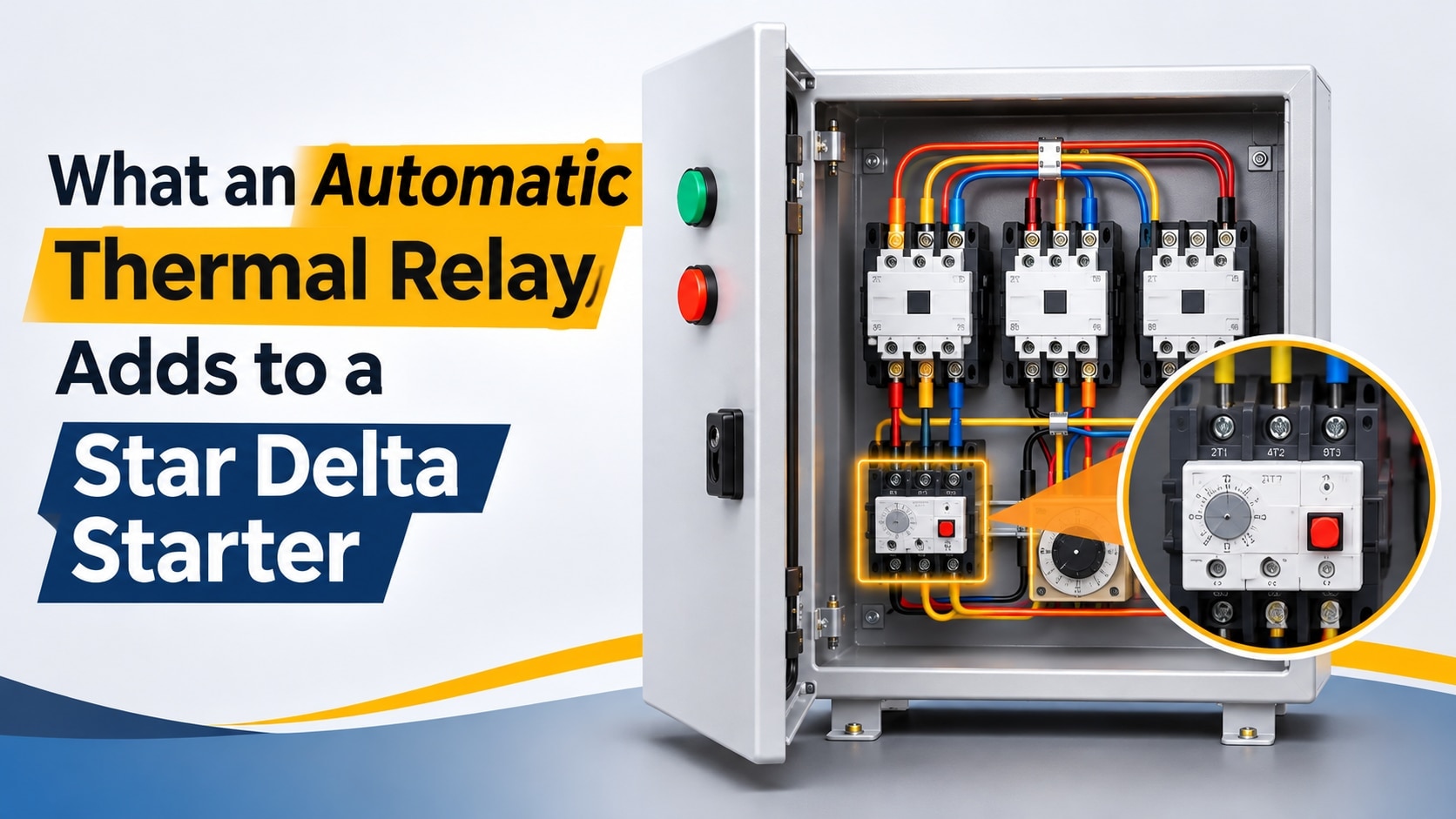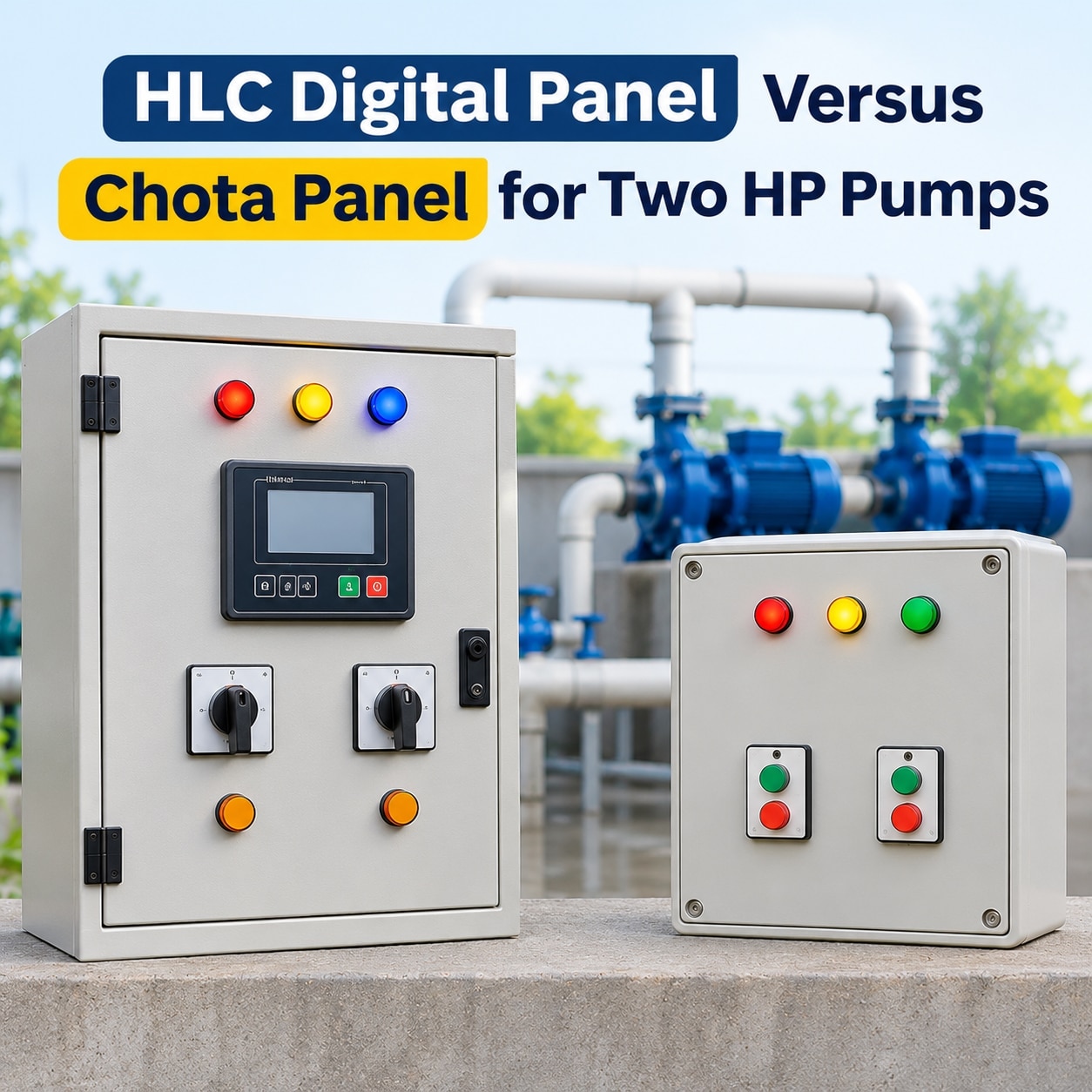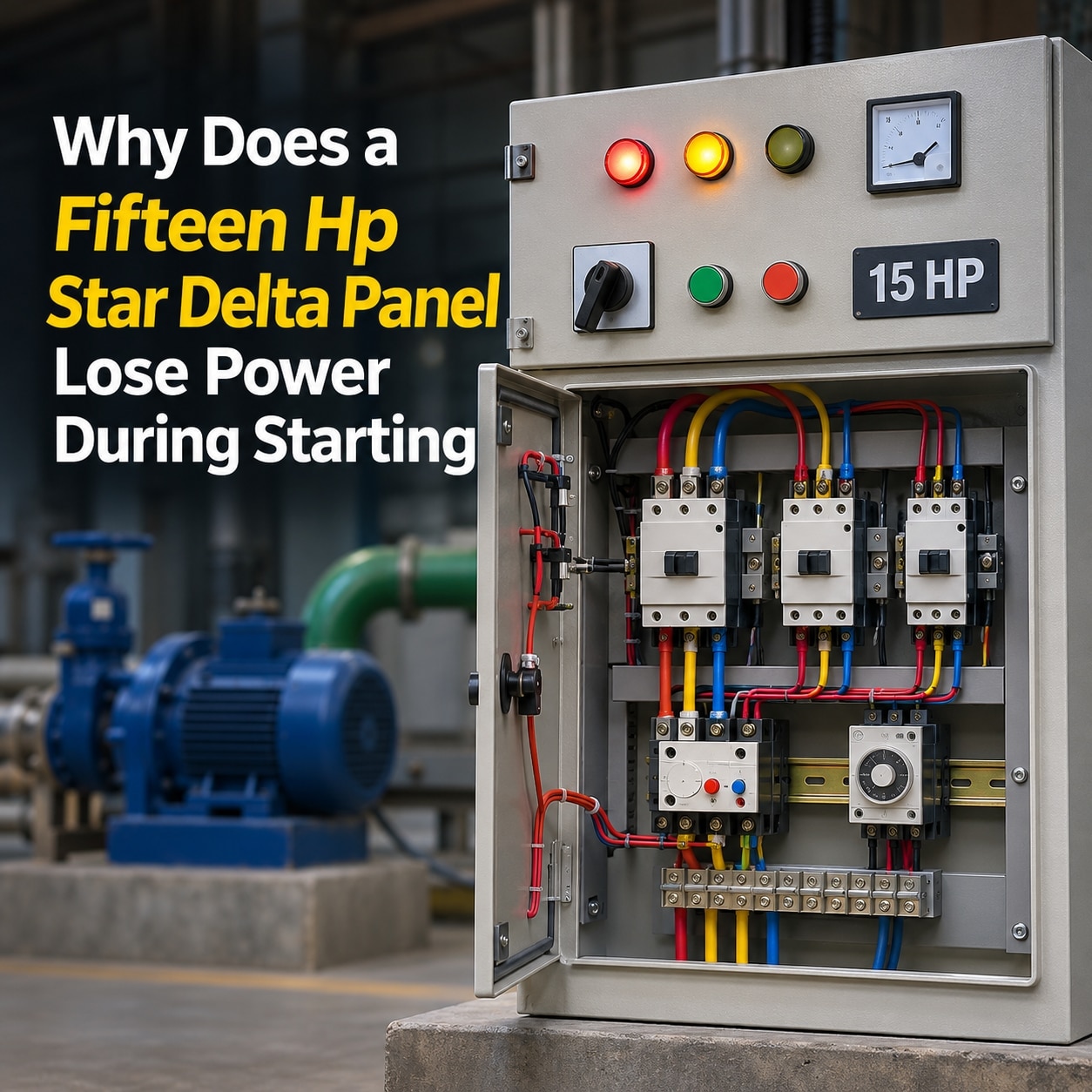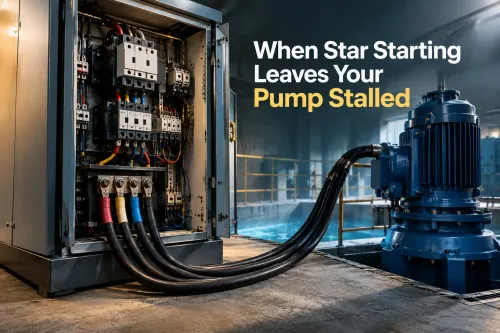
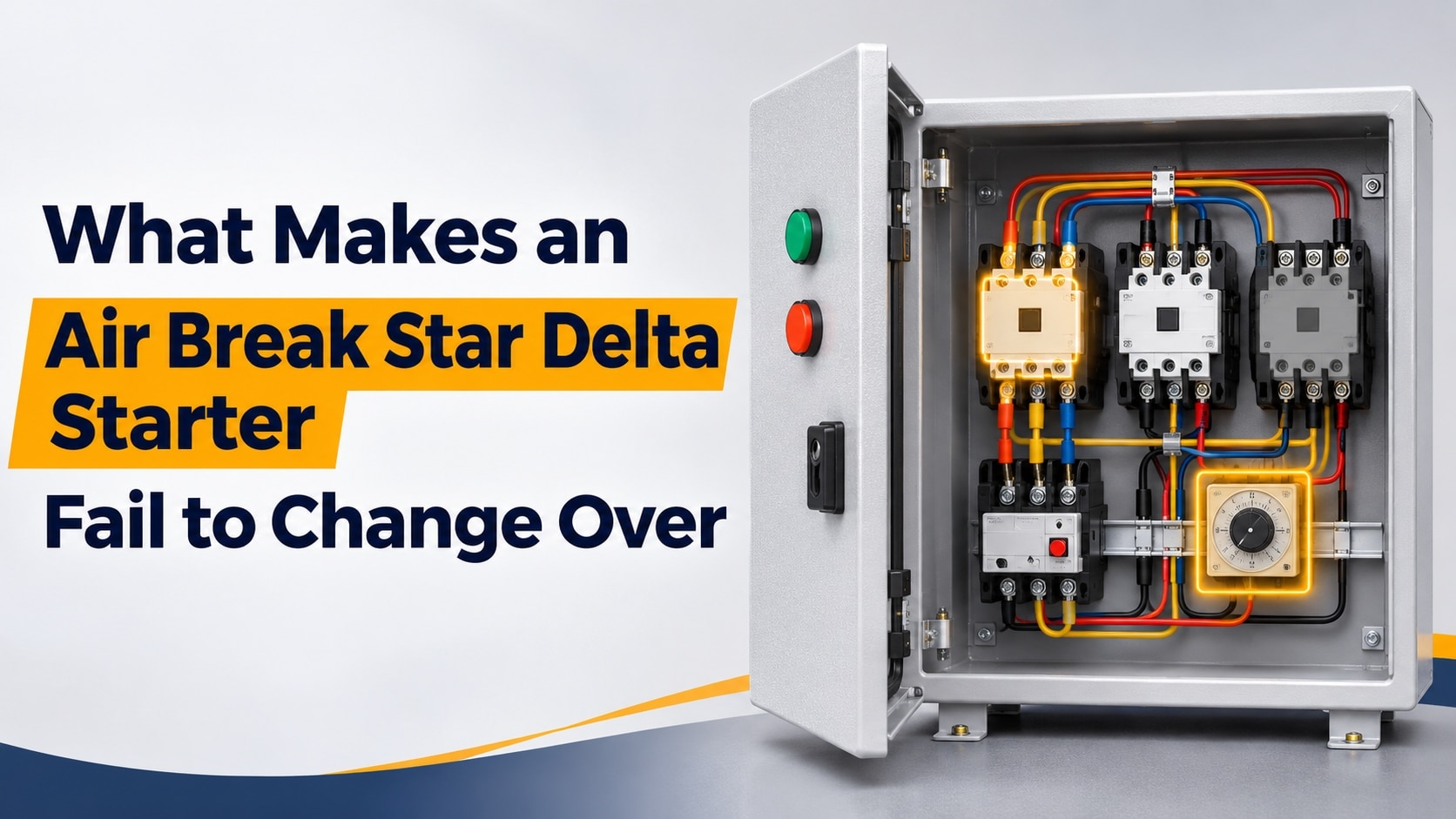
A motor that starts in star but never reaches delta can have a timer fault, a failed contactor circuit, incorrect motor-terminal links, low control voltage or a pump that never accelerates enough for transition. By following the sequence from safe isolation to voltage, contactor, wiring and load checks, you can identify the failed stage instead of replacing the timer without evidence.
Key takeaways
- Check control voltage, stop circuit and timer contacts first.
- Confirm star opens before delta closes; never bypass electrical interlocks.
- Separate timer faults from slow motor acceleration with timed voltage checks.
- Check delta terminal links, phase sequence and pump load under full voltage.
What the star-to-delta sequence is supposed to do
The sequence starts with the star contactor closing, giving each motor winding approximately 1/√3 of the line voltage. This reduces starting current and torque while the motor begins accelerating.
- The timer energises the star contactor first and holds the delta contactor open.
- After the set starting period, the timer opens the star circuit.
- A break-before-make interval lets the star contactor release fully before delta is permitted to close.
- The delta contactor then closes, connecting the motor for normal running at full line voltage.
Star and delta contactors must never close together. Their main contacts can connect different phases directly and create a phase-to-phase short circuit, damaging the starter and supply equipment.
Two interlocks block that event:
- An electrical interlock puts the star contactor’s normally closed auxiliary contact in the delta coil circuit, and the delta contactor’s normally closed auxiliary contact in the star coil circuit.
- A mechanical interlock physically prevents one contactor from closing while the other remains closed.
For a star delta changeover failure, observe the contactors before replacing parts. If star remains energised, inspect the timer, wiring and star contactor. If both drop out, trace the control supply or protective circuit. If star releases but delta fails to pick up, check delta coil voltage, its interlock and timer output.
Which control-circuit checks come first
Start with safe isolation: stop the pump, isolate and lock out the incoming supply, verify absence of voltage with a properly rated tester, and identify the six motor leads before opening or moving connections.
Trace the control circuit in this order:
- Control fuse
- Stop push-button
- No-volt release circuit
- Thermal overload normally closed contact
- Phase-failure relay
- Timer supply
A low control voltage, loose neutral or control terminal, blown fuse, or relay trip can interrupt changeover while the power circuit remains healthy. Measure control voltage at the timer and directly across the relevant coil; do not treat an audible click as proof that the coil has received enough voltage.
| Observation | Likely interruption | Check next |
|---|---|---|
| Star remains energised | Timer star normally closed contact or star control wiring | Measure star-coil voltage and inspect auxiliary contacts |
| Star drops, delta does not pick up | No delta-coil voltage or open interlock | Measure timer delta output and voltage across the delta coil |
| Both contactors drop out | Control supply collapse or protective circuit opening | Check fuse, neutral, overload contact and phase-failure relay |
For an air break starter changeover problem, panel measurements are the correct starting point. If an air break star delta starter fails to change over in coimbatore, the location creates no separate fault category; the same control, supply and wiring checks apply.
How to separate a timer fault from poor motor acceleration
Do not replace the timer first. Prove where the changeover stops, because a working timer cannot overcome a failed coil, interlock or motor that has not accelerated.
1. Isolate safely, then check the timer’s supply voltage against its rated value. Confirm the selected star time, delta command and break-before-make interval. Tighten loose terminals and inspect the timer’s star and delta output contacts for burning or pitting.
2. Measure voltage at the timer outputs during transition; do not rely on a click or indicator. If the star contactor remains energised, inspect the timer’s star normally closed contact, control wiring, a welded star contact and the coil circuit that should release it.
3. If star drops out but delta receives no coil voltage, test the timer delta output, overload normally closed contacts and electrical interlock. Measure directly across the delta coil. A low or collapsing reading points to control-supply wiring, a loose terminal or a failing contact.
4. If both contactors drop out, check for control-supply collapse, an opening stop circuit or phase-failure relay action. Record whether each contactor actually releases before blaming the timer.
5. If the motor reaches near-normal speed but hums, draws high current or trips when delta closes, investigate incorrect wiring, phase loss, excessive hydraulic head or a seized pump. A longer delay cannot cure those faults; set it long enough for acceleration, but not so long that the motor overheats or coasts down.
What contactor, coil and interlock faults block delta
A failed delta coil can leave the timer operating while the motor remains in star. With power isolated, confirm each air-break contactor’s coil rating, then measure voltage directly across the coil during its command. Observe smooth armature movement; inspect weak springs, sluggish travel, welded main contacts, pitted power contacts and worn auxiliary contacts.
A star contactor with welded contacts can keep star connected after its coil releases.
Test the delta contactor’s normally closed star auxiliary interlock and the star contactor’s normally closed delta auxiliary interlock for correct operation and wiring. Confirm the mechanical interlock is fitted correctly and not misadjusted. Never bypass either interlock: simultaneous closure of star and delta can create a phase-to-phase short.
For a star delta changeover failure, compare the starter against the motor nameplate, not horsepower alone. A fifteen hp starter fault can result from an underrated or unsuitable contactor.
| Choice | Check | Failure risk |
|---|---|---|
| Contactor category | Utilization category AC-3 | Contacts overheat on motor duty |
| Current rating | Motor nameplate full-load current | Nuisance trips or contact damage |
| Application suitability | AC-3 rating at the motor’s voltage | Welding or failed changeover |
Which motor-terminal and supply errors appear only at delta
Before applying links, isolate the motor and identify its six accessible leads. Use an ohmmeter to find the three winding pairs, with each pair showing continuity and similar resistance: U1-U2, V1-V2 and W1-W2.
Use the motor markings or a low-voltage polarity test to distinguish each winding’s start and finish; continuity alone cannot identify U1 from U2. A mixed pair or wrongly identified end produces abnormal delta current, reverse torque or failure to accelerate.
- Confirm the motor has six terminals and is rated for delta operation at approximately 400/415 V. A 230/400 V motor is not suitable for 400 V star-delta starting because its 400 V running connection is star.
- Compare all three line-to-line input voltages, then measure all three motor currents in star and again in delta. One-phase checking or voltage measurement with the motor disconnected can miss a high-resistance fuse, cable joint or contactor pole.
- Inspect every lug and link: a loose connection, an end on the wrong terminal, or a link left in place can create an air break starter changeover problem.
| Error | Delta symptom | What to verify |
|---|---|---|
| Mixed pairs or phase reversal | High current or reverse torque | Pair identity and phase order |
| Loose lug or contactor pole | Imbalance and overload trip | Tightness and all three voltages |
| Wrong link arrangement | Excessive current | Delta links against the wiring diagram |
When the pump load makes star-delta the wrong choice
A pump that cannot accelerate in star can make a healthy timer and contactor look faulty. Star starting provides about one-third of direct-on-line starting torque, so these mechanical or hydraulic conditions can hold the motor below stable speed:
- Blocked impeller
- Tight bearing
- Misaligned coupling
- Closed or unsuitable valve arrangement
- High static head
- An overloaded pump
An air break star delta starter fails to change over in Coimbatore for the same reasons as elsewhere; measure at the panel instead of assuming a local supply fault. Immediate overload when delta closes points to incorrect delta wiring, phase loss, low supply voltage, a wrong overload setting or a mechanical load problem.
Increasing the timer delay will not fix any of them.
For a fifteen hp starter fault, use the motor nameplate full-load current—not a generic 15 HP table—to check the overload, AC-3 contactor, cable and control-transformer capacity.
| Option | What it provides | When it applies |
|---|---|---|
| Star-delta | Reduced starting torque | The pump reaches stable speed before changeover |
| Soft starter | Controlled voltage ramp | Acceleration needs limiting without a speed range |
| Variable-frequency drive | Controlled speed and torque | High head, difficult acceleration or variable flow requires control |
If measurements reveal a design, wiring or component mismatch, MAG STARTERS (PRAVIN ENGINEERING) - 08048068970 can help evaluate a correctly specified low-voltage starter or pump-control panel.
Related products
 | Air Break Starters Air Break Star Delta Automatic Motor Starter 15HP ₹10550 We are one of the distinguished manufacturers and suppliers of Air Break Star Delta Automatic Motor Starter. View product → |
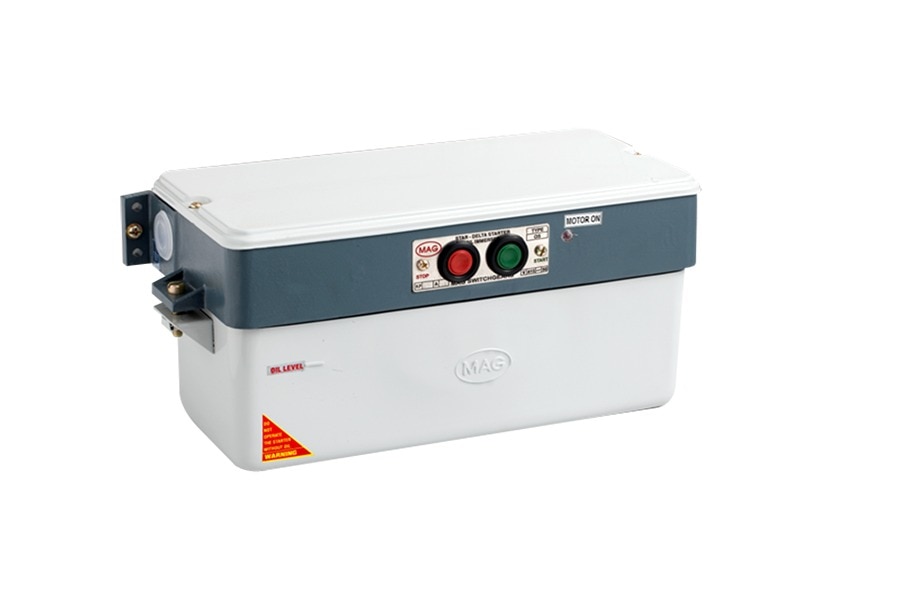 | OIL IMMERSED MOTOR STARTERS STAR DELTA - AUTOMATIC THERMAL RELAY 10HP ₹12890 • Ranging from 5 HP to 50 HP • Contacts made of Electrolytic Copper with Double Break System, Ensure long life and Better Conductivity • No Volt coil... View product → |
Frequently asked questions
What should you check first when a star-delta starter will not change over?
Check the control supply, fuses, stop and overload contacts, timer power, and timer changeover contacts before testing the motor circuit.
How can you tell whether the timer or motor acceleration causes the failure?
Measure the timer’s star and delta contact outputs against the preset time while observing motor speed and current during acceleration.
Which contactor faults can block delta operation?
A failed delta coil, welded star contacts, an open auxiliary interlock contact, incorrect wiring, or a mechanically stuck contactor can prevent delta closing.
Why does a motor fault appear only after delta changeover?
Incorrect terminal links, missing phases, wrong phase sequence, loose connections, or a supply fault can appear when the motor receives full line voltage.
When is star-delta starting unsuitable for a pump?
It is unsuitable when the pump needs high starting torque, accelerates slowly under load, or cannot tolerate the torque and current transition during changeover.
Keywords